Interview

Every Part Matters:
Making the Perfect Cocktail Syrup

There are certain things in life that you only notice when things go wrong—plumbing and air travel come to mind. Occasionally, you find yourself in the opposite situation, where you unknowingly endure a lesser version of something until you see the light. To me, this sums up cocktails pretty nicely.

When you throw some booze and strong flavors together, it can only be so bad, in the same way putting a hot dog on a bun can only be so bad. Personally, I hate that mentality. Life’s too short to limp your way through a poorly made cocktail; I don’t care how tolerable it is. And that’s exactly why we brought on Westin Galleymore a ways back—he’s not only intolerant of bad cocktails, but I’m pretty sure he’s incapable of making them, too.

So, as I tend to do when I have cocktails on the brain, I pull up a chair to Westin’s bar and generally run up one hell of a tab. In this article, I wanted to explore the ingredients that built both of our cocktail syrups—Caliché Cruiser and The Wingman—to show off Westin’s process for curating the perfect cocktail syrup, and hopefully inspire you to potentially do the same. Speaking of which, we have a companion article to this one, where Westin shares his philosophy for making cocktails out of thin air.

Either way, I know two things. We’re going to get a buzz on, and we’re going to learn a lot about how to do it in style with the perfect cocktail.

“We made this cocktail syrup to be insanely citrusy and refreshing, but not one-note. It wasn’t just meant to be a margarita mixer.”

Levi Goode: Let’s dive right in. What was the vision behind the Caliché Cruiser?

Westin Galleymore: We made this cocktail syrup to be insanely citrusy and refreshing, but not one-note. It wasn’t just meant to be a margarita mixer. So many mixers on the market are hyper-specific—either made exclusively for high-end margaritas or designed only for a Tom Collins. We wanted this to be a high-quality base starter.

LG: What goes into it?

WG: We keep the ingredients pretty simple: fresh lemon and lime juice—which gets pasteurized to make it shelf-stable—a little bit of honey, and classic cane sugar. We use powdered grapefruit and citric acid to help stabilize it. Then we grind up makrut lime leaves and infuse them into the syrup before straining it off.

Finally, we add a little bit of vegan pectin to give it a better mouthfeel so it isn’t super thin. There’s nothing worse than a thin cocktail. The pectin creates a texture almost like an egg white, so if you’re making a sour and shake the hell out of it, the drink holds great weight and body.

LG: What spirits pair best with it?

WG: It’s built for pretty much any clear spirit: rum, gin, vodka, or tequila. It’s fantastic with tequila. You can use anywhere from half an ounce to a full ounce, add your spirit of choice and soda water, and make a great ranch water because it isn’t overly sweet.

Or, if you add a bit more syrup with your tequila or vodka, you get a balanced margarita or gimlet that isn’t too sweet or too acidic.

Photo by Jody Horton

LG: How about more off-the-wall recipes?

WG: Absolutely. It gives you a strong foundation to start crafting your own drinks. If you have a bottle of Chartreuse sitting on your bar cart that you bought for a single recipe a year ago, you can combine a half-ounce of Chartreuse, a heavy pour of gin, and the Caliché Cruiser to get a drink that tastes just like a Last Word.

If you were feeling adventurous and made a homemade watermelon syrup, the Caliché Cruiser won’t overpower it because it isn’t cloying. You can layer in other syrups you’ve made or bought. It’s extremely versatile. Equal parts with gin or vodka makes a great shaken gimlet, or you can top that same ratio with sparkling water for a fantastic Collins.

For ranch water, use two ounces of tequila, a splash of Caliché Cruiser, top it with Topo Chico, and add a pinch of salt. We wanted it to be simple enough for a quick two-ingredient drink, but versatile enough to act as a cheat code when hosting so you don’t have to squeeze fresh citrus or make simple syrup from scratch.

Photo by Jody Horton

LG: Alright, let’s move on to the next one—The Wingman.

WG: The Wingman was designed specifically to be an Old Fashioned cocktail syrup. That is one of the hardest things to execute without getting caught up in red tape.

LG: Yeah, that’s a thing.

WG: We wanted to make sure this syrup didn’t contain any actual alcohol. Traditional Old Fashioneds rely heavily on bitters, and bitters contain alcohol. It’s hard to get products approved as non-potable—meaning not intended for direct consumption. That classification is why a 16-year-old can walk into a grocery store and buy Angostura bitters without an ID, even though it’s high-proof, much like almond or lemon extract.

We wanted to avoid those regulatory hurdles while still creating a syrup that wasn’t overly sweet and delivered authentic bitter notes without requiring customers to buy extra ingredients.

LG: And the scientist gets to work…

WG: It took a lot of experimentation, but we landed on a blend of blackstrap molasses, pecan extract, dandelion root, gentian root, allspice, cinnamon, damiana leaf (an herbal leaf native to Texas), roasted chicory root for a subtle coffee note, and brown sugar.

Gentian and dandelion roots provide the structural backbone of classic bitterness. Gentian is the bittering root derived from cinchona tree bark, which is the same agent used to make tonic water. Damiana adds a distinct nutty, bitter note. Chicory brings that roasted flavor we love in the South, famous in New Orleans coffee at Café Du Monde.

It turned out really great. You can mix a half-ounce of Wingman with rum, bourbon, rye, or Canadian whisky. You don’t need an expensive bottle of bitters or a muddled sugar cube. If you have a bottle of whiskey on your bar cart, just add a quarter to a half-ounce of syrup, stir, and garnish with a flamed orange peel or star anise.

“It turned out really great. You can mix a half-ounce of Wingman with rum, bourbon, rye, or Canadian whisky. You don’t need an expensive bottle of bitters or a muddled sugar cube.”

LG: I’m just glad this isn’t a spelling bee. How did you track down some of the wilder ingredients?

WG: For the Wingman, it became a personal mission to study botanical bittering agents. I looked at the core components of Angostura bitters, Genepy from the Swiss Alps, and Italian amaros like Braulio, Campari, and Green Chartreuse—even Jägermeister. People give Jäger a bad rap, but it’s essentially a German amaro; people who turn their nose up at Jäger will happily drink Fernet, but it’s really just a matter of style preference.

I researched which bittering botanicals were safe to use. For instance, you have to be careful with raw cinchona bark or tobacco leaf because improper dosing can introduce toxic chemical properties and make people sick.

Damiana was an easy choice early on. Revolution Spirits out of Austin makes an amaro called Amico Amaro that uses pecan and damiana, which served as inspiration. To source the raw materials, I started at local spots like Canino’s Farmers Market in Houston and various traditional Mexican hierberías, where these botanicals are readily available.

We brewed them into concentrated teas to test extraction times. At first, the plain tea was intensely astringent and bitter—it hit every side of your mouth. But once we balanced it with pecan, brown sugar, and blackstrap molasses, all the pieces fell into place.

LG: Were any of those ingredients particularly difficult to source consistently?

WG: Dandelion root was easier because dandelion greens are widely used in culinary kitchens, so suppliers routinely dry and sell the roots for herbal teas. The same goes for damiana. Many of these ingredients have natural medicinal uses—calming the stomach or reducing stress—so sneaking those healthy properties into a cocktail mixer felt like a win-win.

Gentian root was the hardest to secure in consistent, high-quality batches. You can find spice vendors online, but finding reliable supply chains for commercial production is tricky—you can’t just pick it up in the spice aisle at the grocery store. But that’s kind of the whole point. We found it for you.

“Consumers are realizing these products are convenience shortcuts, not quality sacrifices.”

LG: Ten years ago, most pre-mixed cocktail products were seen as low quality. That perception has started to shift a bit.

WG: 100%. A decade ago, I would have told you that any canned cocktail was going to be garbage. Back then, your options were basically Jack and Coke in a can.

Around the pandemic, when everyone was drinking at home, the category exploded. Hard seltzers paved the way as a beer alternative, but then premium brands started using real distilled spirits instead of neutral grain spirits packed with flavor blockers, artificial aromas, and aggressive carbonation. Consumers have embraced that shift because they want higher quality when drinking at home.

Cocktail syrups and mixers followed a similar trajectory. Growing up, the standard was Jose Cuervo margarita mix, which was full of artificial flavors and overly sweet. People assumed all pre-made mixers were cheap backyard junk not suitable for a real cocktail party.

While cocktail syrups are still catching up in terms of broad consumer awareness, the market has transformed. Boutique shops and farmers’ markets now feature high-end mixers made with real ingredients. Consumers are realizing that these products are convenience shortcuts, not quality sacrifices. Our syrups contain no corn syrup or artificial preservatives; they use natural stabilizers. They won’t sit on a shelf for four years like a Twinkie, but that’s the trade-off for real ingredients. Trust me, it’s worth it.


A big thanks to Westin for sharing his insights and, more importantly, his love for craft cocktails. Truly, that’s the ingredient that matters most to me. He loves his job and his craft. So do I. We’re not developing products just because we can; we’re developing them because we want to have them, too. If you have any questions, concerns, or comments about our Cocktail Syrups (or anything else we make) please reach out. We want to hear from you, even if it just means throwing some ideas around for the next great cocktail recipe.

Interview

Blood, Sweat, and Soil: A Conversation with Chris of William Chris Vineyards

When folks think of wine, they probably don’t think of rebels. But when you talk to a Texas winemaker, you’ll quickly learn that’s exactly what they are—none more so than my good friend Chris Brundrett of William Chris Vineyards.

Why? Well, it takes a rebellious spirit to turn your nose up at Napa Valley and Bordeaux. It also takes a rebellious spirit to go all-in on a burgeoning wine industry and max out a credit card to buy some land.

Say what you will about white tablecloths and fancy wine, but go to the Hill Country these days, and you’ll find that rebellious Texas spirit, paired perfectly with some of the best wines in the world. But make no mistake, they don’t taste like the best wines in the world—they taste like Texas wines, which happen to be some of the best in the world.

The connection between people, place, food, and natural history in winemaking has always fascinated me, so I thought it was high time to chat with Chris about his journey into the industry, the connection between Texan culture and the grape, and how he built a top-50 vineyard with nothing but gumption and elbow grease. Here’s Chris.

Levi Goode: I want to start at the beginning of your journey. How did you find your way into the world of wine? From what I understand, it wasnt exactly a straight line.

Chris Brundrett: Not even close. Many moons ago, I was kind of a lost little puppy. I was a dropout from the United States Merchant Marine Academy. I packed up my bags and wandered back home to San Angelo, but I didn’t even have the courage to tell my parents I was dropping out. I just showed up on the front porch with all my gear. My dad took one look at my bags and said, “Don’t unpack your shit.”

That very evening, I called Texas A&M University. A lady working late in the admissions office took pity on me. I told her, “Hey, I never actually told you guys I wasn’t coming. Can I still show up?” She laughed and said, “Yeah, if you can get here tomorrow.” So I woke up the next morning, drove to College Station, and stepped onto campus without the slightest clue of what I wanted to do with my life.

“Working in restaurants, I started discovering wine as this incredible, living element that enhances food, builds community, and completely elevates the dining experience.”

LG: What led you towards wine?

CB: Working in restaurants, I started discovering wine as this incredible, living element that enhances food, builds community, and completely elevates the dining experience. Eventually, I started working for a small Italian family that owned a white-tablecloth restaurant group in College Station. They let me start ordering the inventory and building the wine lists. I just thought it was the coolest thing in the world.

LG: What was the catalyst that shifted wine from a passionate hobby into a definitive calling?

CB: There was a couple who used to come into the restaurant once or twice a week. They were incredibly sweet people. One night, they looked at me and said, “Chris, you know so much about all these global wines, and you’re so genuinely into it. Have you ever been down to Fredericksburg? Have you ever tasted Texas wine?”

I looked at them completely blankly and said, “Texas doesn’t make wine.”

They said, “They do, right down in Fredericksburg.”

So I hopped onto this new, emerging thing called the internet, did some digging, and found a handful of places. Two weeks later, my girlfriend—who is now my wife—and I drove down to the Hill Country. We stayed in a crappy motel and visited all four wineries that existed in the area at the time. At one of the stops, the owner took us into the back, showed us the fermentation tanks, and let us taste wine directly out of a barrel.

It was an absolute bolt of lightning. It felt like God struck me right there in that cellar. It was a singular, crystalline moment of clarity. I stood there and thought, This is it. This is exactly what I am going to do for the rest of my life.

LG: Easier said than done, I’m guessing.

CB: I went straight back to College Station and immediately changed my major. It took some hard-headed convincing, but I eventually talked the head viticulture professor into letting me join the program and work the vineyards for $7 an hour.

LG: How was Texas A&M viticulture compared to what it is today?

CB: Oh, it’s night and day. What they are doing at Texas A&M now is phenomenal—it’s ten times the program it used to be. They have state-of-the-art wine production facilities now. When I was there, we were operating out of an old, abandoned dairy room. It was total hood-rat winemaking. We didn't have high-end fruit, so we would try to ferment literally anything we could get our hands on.

LG: I gotta ask, what was the worst wine you made in that old dairy room?

CB: Without a doubt, the watermelon wine. It was atrocious. But I wasn’t pursuing a career in fruit wines. I was chasing fine, estate-grown grape wine. I worked my way up from a grunt pulling weeds in the campus vineyard to managing the entire A&M vineyard operation by my final year.

“There was this undeniable, electric hum of potential in the air. Something incredibly special was beginning to take root, and I didn’t want to miss it.”

LG: Did you intend to stay in Texas, or were you looking out west?

CB: I was fully prepared to head to the West Coast. I had a string of job interviews lined up in California. But right around 2006 or 2007, I looked closely at what was happening in the Texas Hill Country. There was this undeniable, electric hum of potential in the air. Something incredibly special was beginning to take root, and I didn’t want to miss it. I turned down California and took a job at a tiny Texas winery where I had previously interned.

One day during harvest, I got into a massive argument with the owner. I was working myself into the dirt—working 50 days straight. A switch flipped inside me. I said, “See you later.” I walked out to my truck and immediately thought, Oh shit, what am I going to do now? The next day, I started my own independent vineyard management and wine consulting company. I became a traveling, freelance winemaker.

By 2008, I was hanging out constantly with Bill Blackmon—who founded William Chris with me. By 2009, our philosophies aligned so perfectly that we said, “Screw it, we have to do this ourselves.” We took $40,000 on an American Express card and founded William Chris Vineyards.

LG: Who needs venture capitalists.

CB: It was definitely a gamble. We found a beautiful little historic farm in Hye, Texas. People told us there was absolutely no way a business could survive out there, but we believed in the land. The moment we opened, the business was instantly on fire. The growth has been relentless ever since. Today, we farm vineyards all over the Hill Country and the High Plains. We are blessed to have 120 families working inside our company across six or seven distinct wine brands. Breaking into the top 50 in the world last year at number 31 was a monumental milestone for us, but more importantly, it was a victory for Texas wine as a whole.

LG: How does the environment of your vineyard affect the final product?

CB: I can plant a five-acre block of Cabernet Sauvignon right here in my backyard in the Hill Country, where the vines grow directly into ancient limestone. Then, I can drive just 30 minutes north and plant the exact same clone of Cabernet Sauvignon, but there it’s growing on decomposed red granite. The minerals, the age of the vines, and the unique weather patterns of that specific vintage will result in two wines that taste completely different.

Even the human element is part of it. If a vineyard manager is going through a messy divorce, you’ll probably get a taste of it in that bottle. Everything leaves an imprint.

What we have in Texas is a highly unique terroir that exists nowhere else on the planet. When people taste our wines and say, “Well, this doesn't taste like Napa Cabernet,” my response is always, “No shit! It’s not supposed to.” We aren’t trying to copy California or Bordeaux. We are trying to bottle the honest, rugged expression of Texas soil.

LG: How much has the broader Texas wine landscape transformed over the last 20 to 25 years? The public perception used to be pretty skeptical.

CB: It is completely unrecognizable today. The modern industry didn’t start rebuilding after prohibition until the 1970s, but the true, exponential boom started in the early 2000s. Today, there are over 900 commercial wine permits in Texas. We are officially the fourth-largest wine-producing state in the nation. We are second or third in the country for total economic impact, and the Hill Country is second only to Napa Valley in terms of annual tourism visitation.

The seismic shift, however, has been entirely about quality. Ten years ago, there were just glimmers of greatness. Today, I can easily give you a list of 20 different wineries within an hour’s drive where you will have an absolutely world-class experience.

LG: Do you still occasionally run into people who hold onto that old bias?

CB: A decade ago, I’d hear someone say, “Texas wine sucks,” multiple times a day. Now, I might hear it once or twice a month. When I do, I look at them and ask, “When was the last time you actually tasted one?” Usually, they admit they’ve either never had one or they tasted something 20 years ago.

You can fit the entire country of France inside the borders of the state of Texas. I was just in Napa Valley recently, and guess what? There is some shitty wine in Napa. There is plenty of shitty wine in France and Italy, too. You can find bad wine anywhere on earth if you look for it. But the train has officially left the station in Texas. You can either get on board, watch it pass you by, or stand in the middle of the tracks and get run over. We are producing some of the finest, most unique juice in the world right now.

LG: If someone has spent their life touring Napa or Bordeaux, what’s different about walking into a top-tier Texas winery?

CB: It comes down to an authentic, unpretentious aura of hospitality. Napa has done an incredible job and they’ve built a legendary industry, but often when I visit out there—and I am an insider in this industry—I can feel incredibly uncomfortable. You sit down for a $250 tasting where they pour $500 bottles, and the vibe can feel very stuffy and exclusionary.

In Texas, we believe in stripping away that elitist barrier. I love ripping into a badass $50 bottle of wine that has immense heart and soul, farmed by gritty, hardcore agriculturalists. In Texas, you will find the actual winemakers and vineyard managers rolling through the tasting rooms. Everyone is deeply hospitality-driven. We want you to have an epic time, we want to educate you, but we never want you to feel small. Wine shouldn’t be a high-brow luxury reserved exclusively for the wealthy. It belongs to anyone with a palate.

LG: Tell me, how does a vineyard land in the top 50 worldwide?

CB: It requires a relentless pursuit of excellence. In our company, we have a golden rule: You cannot leak integrity. You can never allow a single bottle of wine with your name on it to be anything less than great. If we harvest a block and the resulting wine isn’t hitting our standard, we won’t bottle it under our label.

“In Texas, you will find the actual winemakers and vineyard managers rolling through the tasting rooms. Everyone is deeply hospitality-driven. We want you to have an epic time, we want to educate you, but we never want you to feel small.”

LG: Let’s walk through a hypothetical. If Joe Smith walks into your tasting room and says, “The only wine I’ve ever drunk is Yellow Tail out of a plastic cup at a wedding,” how do you guide him without making him feel judged?

CB: We get incredibly excited. First, we teach him how to physically handle the glass. We show him that a wine glass has a stem for a reason—so your hands don’t warm up the juice. Then, we tell him to put his entire nose deep into the bowl and take a massive breath. I might tell him what aromatics I smell—maybe I get citrus, leather, or ripe blueberries—but I always tell him, “Look, this is your journey. If you smell cherries or baking spices, you are exactly right.”

Next, we teach him how to take a sip, swirl the liquid completely around his palate, and think about how it registers on the edges of his mouth versus the center. We show him how to swirl the glass on the table to introduce oxygen, releasing those secondary and tertiary aromatics that lay down a whole new layer of complexity. Then, we hand him a specific piece of artisanal cheese, tell him to take a bite, and sip the wine again. Suddenly, his eyes light up because the wine completely transforms on his palate.

Once we have him engaged, we tell him the story of the land. We say, “Let me tell you about the rugged farmer up in the Texas High Plains who grew these grapes. He’s a retired Marine, he’s got a three-legged dog, and he farms at one of the highest agricultural elevations in the world.” Suddenly, Joe isn’t just drinking an engineered beverage anymore. He understands the human hands, the resource investment, the French oak casks, and the sheer labor that justifies a $40 price tag over a mass-produced grocery store bottle. It’s a beautiful ripple effect.

LG: To close things out, I want to go back to your start. What was it about wine specifically that captured your imagination?

CB: I love the restaurant industry because you get to serve people and curate an experience within the four walls of your establishment. But you can’t wrap a Michelin-starred dinner up in a cardboard box, mail it across the country, and have it survive.

Wine is a living capsule of time and place. It allows me to sit at a table with people on their absolute best days, their worst days, and in the most intimate spaces of their lives.

The ultimate compliment I can receive isn’t an award or a write-up in a magazine. It’s when a customer calls me up out of the blue and says, “Chris, my wife and I were sitting on our back porch last night. We pulled the cork on a bottle of your wine. The first glass was solid, but during that second glass, the wine completely opened up, evolved, and bloomed. I don’t even know how to describe it, man, but it made our entire night unforgettable.”

A mass-produced, factory-engineered grocery bottle is static; it will never do that. The wines we produce are alive. When you pull a cork, you are stepping into a once-in-a-lifetime, singular experience. This isn’t just a profession for me, Levi. This is exactly what God put me on this earth to do, and I’m going to chase this beautiful juice until the day I die.

Photography by Steve Schwartz.

Interview

Just Go Fish: A Conversation with CCA’s President and CEO Pat Murray

Pat Murray and I go back a ways. Not only is he a close (and very fishy) friend, he’s also at the forefront of protecting the most important place on the planet for me: the Texas Gulf Coast. Okay, that may be selling him a bit short. As the National President and CEO of the Coastal Conservation Association (CCA), he’s in charge of numerous chapters across the entire country, which cumulatively represent the largest stewards of our coastal waters, Texas included.

In just about a year, both the CCA and Goode Company are going to celebrate our 50th anniversary, and that couldn’t be more fitting. My dad, Jim Goode, was as passionate as they come about the Gulf Coast, and was closely involved with CCA (then known as the Gulf Coast Conservation Association) and their efforts. I’ve always loved that two entities in two very different industries can have so much in common, and we still work with CCA to this day.

But enough reminiscing. It’s only 2026 and we both have plenty of work to do. Recently I caught up with Pat to talk through CCA, Gulf Coast conservation, and everything in between. As always, I learned all sorts of things, including the fact that oysters are more than just damn fine eating. Here’s my good friend, Pat Murray.

Levi Goode: What’s up, Pat! We have a pretty big milestone coming up, huh?

Pat Murray: We’re both rapidly approaching our 50th anniversary, which I’m going to guess lines up with a great party…

LG: That’s a pretty safe bet [laughs]. To set up this conversation, do you want to give our readers a quick rundown on the CCA?

PM: We were founded in 1977, just like Goode Company. It’s kind of a fabled story: a group of 14 anglers got together because of rampant overfishing of redfish and speckled trout in Texas and decided to make a difference. By 1981, they had a ban on single-strand, monofilament gill nets and went on to help with many, many more things.

They grew and helped fund the creation of two of the world’s largest red drum hatcheries and achieved many of the things on the science side and the conservation side and the advocacy side to make a difference in the future of our resources. That model was founded here in Houston, and we now have offices in 12 states and do business throughout the coastal US on all three coasts. It’s really been a great story of what can happen when we get like-minded people together all pulling in the same direction.

“CCA literally started with 14 anglers getting together in a tackle shop and saying, ‘We’re going to make a difference.’ It always starts with people who believe they can make things better.”

LG: How did you get wrangled into this organization?

PM: I was a full-time fishing guide, primarily in Galveston Bay and the surrounding waters, fishing 200 to 250 days a year targeting trout and redfish. And I was attracted to what was called the Gulf Coast Conservation Association at the time because I believed that the proper conservation of resources is critical, not just for my business as a guide, but as an angler and someone who has loved the ocean since my earliest memories.

When I got the opportunity to go to work for CCA, it was really a dream come true. I’ve been in seven different roles here and currently serve as our National President and CEO of the Coastal Conservation Association as well as our national habitat program, the Building Conservation Trust. I’ve worked on state and federal advocacy, grassroots development, and so many parts of enterprise development that have been transformed because of the amazing people I get to work with.

LG: From a conservation mindset, how important has it been for you to come from a guiding background?

PM: That’s a great question. The thing it gave me was a passion for the resource. It gave me a connection to the resource in a way that I was able to see how incredibly delicate it is. You’d find that things would change rapidly because of either something we couldn’t change, or things we could change. On a day-to-day basis, it showed me how intertwined everything is, which has been critical in understanding the habitat and water quality and inflows, both freshwater and saltwater, and good healthy passes and all these things, along with proper management of fisheries.

Maybe this was most important… I also saw that you can make a difference. And that’s probably the thing that is most important now because it’s very easy for people to think they can’t. CCA literally started with 14 anglers getting together in a tackle shop and saying, “We’re going to make a difference.” It always starts with people who believe they can make things better.

LG: I know a big part of your job is working with legislators and different government agencies. Is it frustrating when our laws and regulations are set in place by folks who spend zero time in the waters they’re regulating?

PM: Yeah, for sure. You see it in hunting all the time, too. We see all types. Some who are downright anti-fishing. Some who think recreational fishing is sort of an out-of-control deal that’s overrunning the resources. In reality, we’re the ones who are advocating for the most conservative measures, historically. They completely missed the fact that the majority of conservation efforts have been driven by anglers—efforts to create game fish status, remove gill nets, build hatcheries that are putting millions of fish back in bays. Those are all recreational anglers. I’m no expert on hunting, but the same thing’s played out in hunting—the end to market hunting and the proper management of North American game species came from sportsmen and women.

If you’re doing it recreationally, you not only want the resource to be there tomorrow with your kids and grandkids… you want it to actually be better. That is the power of conservation because you’re saying, “We want to manage it, but what can we do to build a habitat to make this even better and more resilient under increasing human pressure and urbanization and industrialization.” All those things are coming.

LG: I’d love to get a quick “state of the union” on Texas’s coast. Over the past year or so, what have been some notable wins for CCA?

PM: There have been some things in recent years that are really exciting, particularly in Texas, and a lot of those center around oyster conservation. Oysters, to me, are the workhorses of marine habitats. They’re filtering water as well as providing coastal resiliency and marsh protection. They stimulate benthic growth. They serve as habitat for forage species and game species. They’re everything for the ecosystem… and you can eat them. I always say the cool kids are coral and sea grass, but they’re really not very good to eat. Oysters are an amazing part of our ecology, and an amazing part of our culture, too.

There have been some things that have emerged in recent years that give me great hope for the future, and one of those is prioritizing the conservation of oysters. And that’s not just CCA. We’re working with large numbers of groups. We’re putting millions and millions of dollars into oyster conservation. We pledged $5 million fairly recently for restoration. We work closely with Texas A&M University–Corpus Christi’s Harte Research Institute to make sure we’re leveraging the best possible science to try to get habitat not only back where it used to be, but also possibly pioneering new areas through some of the management measures put in place by Texas Parks and Wildlife. Our goal is to create even more conservation leases and things that will create better water conditions, create more habitat, and create more fishing opportunities.

I’m really excited about where we are in Texas with oysters. Another piece of that puzzle is mariculture, and how the role of farm-raised oysters is a key part of our future. Restaurateurs like yourself, among others, who are serving these mariculture-raised oysters do a great service to show people that that resource is super renewable, particularly when done in that way.

Also, programs like Sink Your Shucks and the Oyster Recycling Program that Goode Company works closely with are making huge impacts for oysters. Those oyster shells are getting appropriately cleaned and put back into the bays. That’s great for rebuilding reefs, but the intangible part of that is the amount of people who are educated when they walk into Goode Company Seafood and get some oysters on the half shell, only to realize that those shells are going to go back in the water. They might never have thought about where the oyster came from and why that shell matters. There’s a lot of excitement going on in terms of public awareness.

LG: Education’s great when beer and oysters are involved.

PM: [laughs] Exactly.

LG: What about CCA’s work with flounder?

PM: Our state’s hatchery production of southern flounder has a lot of upside to it. Flounder are an unusual species and have this cult-like following among anglers. Maybe it’s just the nature of the species itself and the physiology of it, but everyone has a certain adoration for flounder. I have very early memories of my dad fishing for flounder. He was one of those guys who would fish around a piling for half an hour trying to catch a flounder off of it. It’s a beloved species, and there are a lot of people who really like to eat it. They’ve faced some challenges due to that, and also due to environmental reasons.

They haven’t had great spawns naturally recently. This is where things like a hatchery come in. CCA helped fund the construction of the Southern Flounder Hatchery at Sea Center Texas in Lake Jackson. They’re raising juvenile flounder that can be put in our bays. They’re very difficult to hatch and raise, but they’re working on it and the technology is improving quickly. It holds great promise for southern flounder stocks, but it also begins to raise your eyebrows about what else could we affect? What other species could we help? I don't have a particular list in my head, but the fact that hatchery technology could come in and support a stock that is facing increasing fishing pressure—and also has some significant environmental challenges—is an amazing way for us to step in and help.

LG: On the other side of that coin, what are some challenges on the horizon that CCA is going to be facing?

PM: I’d have to say oyster conservation is our greatest win and our greatest challenge. It’s clearly going to be a challenge because the oyster is so sensitive to so many things. There was a great scientist, Dr. Sammy Ray, who said that the oyster’s biggest problem is they live so darn close to us. They’re subject to everything from pollution to siltation to consumption to anything else you can imagine. There are a lot of things that naturally affect them, as well as man-made aspects. We’re going to have to keep them really high on the priority lists, particularly in Texas. It’s a large challenge and it’s not one you can fix overnight. We’ve made some tremendous strides working with the Texas Parks and Wildlife Department, but there’s almost limitless work to do there.

Also, I think it would be naive to say the growing population of anglers isn’t a challenge. I’m always quick to take the other side when people say there are too many fishermen. I regularly heard that when I was a fishing guide 30 years ago, so evidently, there are always going to be too many fishermen in our collective opinion.

LG: Every fisherman thinks there’s too many fishermen, right?

PM: Yep, that’s just part of it. But I always go back to something that my mentor, the late Captain David Wright, told me when I was a young fishing guide in my twenties. All of my fishing spots were covered up that day, and I was complaining like a little school kid about all my stuff being covered up again. David shook his crusty old finger at me—trust me, it was crusty—and said, “You’d better hope these people are always out here because if they’re not, then we’re out of business.”

He wasn’t just talking about our business income. His broader point was the same as CCA’s founder, Walter Fondren, when he said, “The biggest threat to our resources is anglers not being there to protect them.” They’re both spot-on. When you go back to unregulated market fishing, it’s game over. Just like anybody else, I know we’ve got a lot of anglers, but I’m also very sensitive to the fact that more anglers mean more potential conservationists.

LG: Beyond market fishing, as soon as people stop using a place, every industry in the world is going to come in and develop it.

PM: Exactly. When the stewards of the resource aren’t there, that’s when the mischief happens. It’s either going to get industrialized or over-harvested or whatever it may be. If there aren’t people who believe that the resource is more valuable when it’s intact and growing, then someone’s going to harvest the last of it.

“When the stewards of the resource aren’t there, that’s when the mischief happens... If there aren’t people who believe that the resource is more valuable when it’s intact and growing, then someone’s going to harvest the last of it.”

LG: Speaking of regulations, do you think anglers can rely on our regulations to know they’re doing the right thing? We’re not biologists or conservationists, so at some point we need to rely on someone else for direction.

PM: I think that’s a great question, and I don’t have a definitive answer. But I can use Texas as an example. As an Texas angler, you can know Texas Parks and Wildlife is using their best possible science to drive their management decisions. I know that for a fact. Remember that science changes sometimes. We as humans are wrong sometimes. I remind people all the time that the weatherman doesn’t want to be wrong. Sometimes it just happens. Sometimes the science that we’re managing off of isn’t right, so it’s vital that they’re always attentive to it and correcting and improving management. TPWD is a great example of that model of always striving for proper management.

Now, I will say this—what we see on the federal side is far more challenging. Definitely. If you think about some of the best success stories—redfish, speckled trout, flounder, and snook—all of them are state-managed. Usually, that’s where you find the best management. There are plenty of exceptions in any kind of management, but I would say in general, in those well-managed states like Texas, the science and management are as good as there is.

LG: Believe it or not, that helps me sleep a little bit better at night.

PM: Particularly in the state of Texas, I know those folks. I know how hard they work. I know how much they care. Many of them are anglers, too. They care about the resource, and they care about the health and future of it, and they do their best to manage it.

LG: What are some day-to-day things that anglers can do to help support the Texas Gulf Coast? Obviously, we can follow the regulations, but what else is there?

PM: You can do a lot. One thing is to figure out a path, be it through social media, online resources, or whatever, to stay attuned to what’s going on. Then find a place where you can make a difference, where you can make your voice heard, and make sure you’re following what Texas Parks and Wildlife is doing regarding hearings. When they have a hearing or a public comment, you’re going to have to do your part to make sure you are a part of it. That’s one answer.

The other answer is to go fishing.

LG: Sir yes sir.

PM: It’s really easy to prioritize things other than fishing, because fishing takes a little bit of work. Unless you happen to live right on the coast with a boat dock and a lift, it takes some effort. But when you’re regularly fishing, you’re keeping that passion lit. And when that passion stays lit, you’re going to stay attentive to what the resources need. It’s maybe the most important thing any of us can do as conservationists and anglers: Just go fish.

Photography by Jody Horton.

Interview

How Credence Defines Michelin-Star Service with Elliot Wood

After decades in the culinary industry, I’ve learned a few things, most notably that your restaurant sucks if you don’t have the right people. It doesn’t matter how good your food is, what the atmosphere feels like, or if you have 100,000 followers on Instagram—you’ll burn out in spectacular fashion if you don’t find the right folks.

Our folks at Credence are kickass, and we now have a Michelin Service Award to prove it. That’s right, a few weeks back, myself and Credence’s General Manager Elliot Wood got to do something we didn’t expect—walk across the stage to accept the award that so many culinary teams around the world work for day-in and day-out.

So why did we get it? Well, I think it’s because we don’t work for a Michelin Award. I’ll let Elliot do the explaining, but I’ll just say that we’re in this industry for the same reason my dad got into this industry, and why we put so much effort into finding folks who share those intentions. We do this for the couple at table four. We do it for the group of guys celebrating at the bar. We do it for the lady who thought she wanted her steak well-done, but really meant medium. If we do right by those people, we do right by Michelin.

But back to Mr. Wood. I couldn’t be more proud of him and his team who work tirelessly to ensure our guests at Credence come away with more than a good meal, and this award is a result of their undying commitment to creating a good time for every guest who walks through our doors. To celebrate, I tracked down Elliot to talk about his background, the award, his philosophy, and how we’re taking one bad Yelp review way too seriously. Here’s Elliot.

Levi Goode: Alright, I guess we better start with the basics. How’d you end up with us at Credence?

Elliot Wood: I grew up in the restaurant industry. My father had a handful of restaurants on the River Walk in downtown San Antonio. So, when other kids had chores around the house for an allowance, I worked at the restaurant. I have vivid memories of washing dishes in a three-chamber sink. We made our own dough, so you had those dough tubs as well that were all oily, and you had them really struggling to get everything out.

It was a heck of a way to get introduced to the industry, but it was one I fell in love with immediately. I grew up in it. I went to the University of Texas at Austin and I got back into the restaurant industry, serving at Ruth’s Chris Steakhouse in the late nineties. I studied economics and mathematics at the University of Texas and, towards the end of my tenure there, when most everybody else went to either law school or finance, I got offered a management position at Ruth’s Chris. I moved up with them and became the general manager at 23 years old.

We don’t have time to go through my whole story here [laughs], but it’s been a wild ride. I moved from Austin to Houston and worked at several different restaurants, and sort of stumbled into doing equipment supply and consulting for restaurants in the area. Then I opened a concept with some partners, got out of that, and ended up managing a few concepts in Houston. Last year, I was approached by a group of investors who wanted to open a restaurant. I put together an investor deck and started looking at buildings. We probably looked at a dozen buildings here in Houston, and finally found a good fit. My investor deck was essentially pitching a Texas live-fire restaurant.

“It is a celebration of South Texas through the lens of live fire. We’re all about the stories of Texas, from the food to the drink to the look and feel of the atmosphere.”

LG: I know where this is going.

EW: [laughs] It was also going to have a speakeasy. When it was time to sign the lease, I went back to the investors and said, “I need you all to move the money into the business accounts because I’m going to sign this lease.” They kept giving excuse after excuse. After almost two months, now I’m getting frustrated. Meanwhile, I had been chatting with Chris Shaw at Goode Company and I knew he had this new project, I didn’t know what it was. I sent him my investor deck to see if he knew anybody who was interested. He called me back and said, “Hey, I want you to come meet Levi to talk about a new project.”

I went down and walked into the space—it still had paper on the windows and everything—and realized that Credence is everything I was arguing our market would embrace. It is a celebration of South Texas through the lens of live fire. We’re all about the stories of Texas, from the food to the drink to the look and feel of the atmosphere. And there’s a speakeasy. Literally, the universe was talking to me. I had to be a part of this project. Our industry can be a very challenging one and, when you trust who’s at the top, that makes a big difference. That was all I needed at that point.

LG: Since we opened our doors, what have you learned to love most about it?

EW: The biggest part is that we’ve been able to influence the culture. We’ve been allowed to hire people who believe what I believe, which is that it’s more than just a dinner. It’s an experience that’ll change your life. I really believe that, by the way. I believe that if you give us the opportunity for an experience at Credence, we will change your life.

Everybody’s got that one memory of the best dinner they’ve ever had. Maybe it was five years ago and they were in Vegas or Chicago or New York. Most people may not remember the specifics of the dish, the name or the drink, but they remember how it made them feel, and that’s what they carry with them. That’s what’s at stake with every single guest, every dish, and every day with us. Our team buys into that, and they believe that we are storytellers and get the opportunity to craft memories that last a lifetime. I think the fact that we built that philosophy into our service model is why I was able to go accept that award at the Wortham Center.

LG: Oh yeah, I think I heard something about that. Imagine you’re talking to someone who doesn’t work in the F&B industry. Why is a Michelin Award so meaningful?

EW: One of our Houston Astros players, Carlos Correa, came in last week and I showed him the award. He said, “Michelin, that’s like the World Series for restaurants.” I just thought that was great. Michelin wasn’t in Texas until last year. Coming up in this industry, you hear so much about it, almost to an unobtainable level. You hear about restaurants in France and Europe, and you grow up in this industry hearing stories about people going on a sabbatical and spending years of their life interning at these restaurants, just to have the opportunity to learn from these chefs and these teams. It’s almost a religious experience and the fact that it’s now in Texas, that’s amazing.

That’s what I would share with anybody who’s not in our industry—you really have to understand how it’s shaped all of our lives over time. It’s been on this pedestal. Now it’s in Texas and in the rest of America, and the amount of history that our industry has poured into the idea of what Michelin is, is very profound.

LG: Walk our reading audience through the selection process—it’s not your typical award show.

EW: Their whole thing is they want it to be secret, right? You don’t even know if you’re nominated. They have their chief inspectors and their regional inspectors, they make a list, and when the list gets smaller, they go visit again and again and again.

LG: Very incognito.

EW: You have no idea. Everybody likes to think they can spot ’em, but it’s almost like they’re mythical unicorns. Nobody’s ever really pegged who they are. It’s like Daft Punk. They have no identity.

So they visit and over time, they form these impressions. We got an email asking for information, so you start to get some clues. They won’t tell you outright, but it did have an invitation to the event and it had my name plus a guest, which obviously was you and me. About two weeks before the event, I got another email from an editor. This time it was not a form or anything, it was from an actual person, and they asked for an informal interview about my background and belief in hospitality.

I worked really hard to give an authentic response. About a week before the ceremony, they emailed again and asked for headshots and the rights to the photography by Jody Horton. And at that point we’re feeling pretty confident. There’s the restaurant awards and the special awards. If it’s a special award, it’s either Young Chef, Sommelier, or Service. I’m not the chef, and it’s been a long time since my sommelier days in 2003, so we were hoping it was the service award.

“One of our Houston Astros players, Carlos Correa, came in last week and I showed him the award. He said, ‘Michelin, that’s like the World Series for restaurants.’ I just thought that was great.”

LG: Spoiler alert: we were right.

EW: So we went to the Worthham Center, which was a world-class experience, but not sure what to expect. We got to the Service award and it started slowly spelling out the letters of the name, and my heart sort of dropped out of my chest. It became real all of a sudden.

LG: What went through your mind in that moment, and what’s gone through your mind since you received that award? You’ve come a long way from washing dishes for Dad.

EW: I really do think about my journey starting as a kid, washing dishes in Dad’s restaurant. I wish I would’ve said more when I was up there and acknowledged him because that’s who really shaped my identity at a young age. I took a very unconventional path. People who have seen my resume know I’m an entrepreneur at heart, so it was a very different path to get here. Every little step of the path was critical in shaping who I am and how I got to be here.

If I hadn’t walked in the door and became a server at a Pappas Bros., I would not have been shaped by how they handle fine dining and hospitality. I learned a lot there. If I didn’t go and help open 60 Vines after the pandemic, I wouldn’t have learned about how to position brands in an emerging market. Honestly, I’m not sure what to think about the award yet. It has a profound effect on me I’m sure, but if any one of the little pieces didn’t happen, then I wouldn't be here.

LG: What makes your experience with Credence different from your past experiences?

EW: Honestly, the final dot on the “i” for me is when I got to meet you. One of my concerns was making such a big shift. There’re legends about our industry, about how hostile our industry can be, right? Gordon Ramsay yelling with a knife. We’ve all worked for those kinds of guys. But Chris was giving me a little background about meeting with you for the first time, and he said, “I don’t think I’ve ever even heard him raise his voice.”

I picked up on your heart for hospitality instantly. We talked about values and principles and beliefs. It starts at the top. It doesn’t matter what your organization is, if the vibe at the top is one way or the other, that’s how everybody else is going to vibe. You set that tone.

LG: Oh stop, I’m blushing. Enough about me. I want to know, from your perspective, what separates “great service” from “Michelin-Star Service.”

EW: That’s something I talk to our teams about a lot. It’s not rocket science. It’s service with a smile, hot food served on time. But we could technically do all those things perfectly, and we still haven’t made a memory. That’s not good enough, quite frankly. It’s how you make people feel about it. That’s the difference between service and hospitality—the emotions it creates in a person. Anything else is just transactional. We want our team to be storytellers, and there is a lot of story in our menu. Almost every single dish has a background that’s fun to talk about.

One example I gave our team is when I went to Hotel Emma in San Antonio. They didn’t know I was coming, and I showed up just in time for dinner. One of the hotel staff, not even sure what division he managed, started talking to me and he said, “Hey, do you have a moment? Can I show you around?” He spent like 20 minutes giving me a tour, telling me stories and background about every little piece of it. That’s when it really clicked for me. We could have the most beautiful restaurant, the most delicious food, and we can be technically perfect, but if we don’t act on it, it means nothing.

LG: Speaking of storytelling, let’s end on a good story. Got one?

EW: You bet. Bao Ong is the food writer for the Houston Chronicle, and he wrote a very glowing article about Credence, giving us three stars. The day after the Michelin ceremony, he wrote another article about us, but included a comment about how a reader had reached out to him saying they didn’t have a great experience there, and didn’t know if we really deserved the award. He said he immediately started second-guessing himself. Did I do a disservice by giving Credence three stars? And at the end of the article, he made the point that he felt affirmed in his recommendation.

I actually messaged Bao on Instagram, and said, “I really appreciate the article and all the kind words, but I cannot get past the fact that there’s somebody out there who did not have a good experience. I want to make it right. I know as a journalist you won’t give me their contact information, but if you can give them my information, I’d like to have a chance to make it right.” And he did. We actually connected and I had a half-hour conversation with that person a few days ago. I’m not just going to give them a gift card and hope for the best. I want them to come in as my guest.

We’re working on that date now, and I can’t wait for that. Those are the kind of moments that we get excited about. Give us those. Let us feed you, let us show what we can do. Let us craft something for you. I guarantee you it’s going to be fun. We’re going to have fun. And you’re going to have a memory that will last a lifetime.

There are people who say, “Don’t reward people who do that. She’s a serial negative reviewer.” You know what? Challenge accepted. Your biggest critics can be your best fans when you turn ’em around. And, trust me, they’ll be raving fans.

Interview

Snapshots of Texas’s Iconic Stilt Houses

Welcome to part two of my conversation with author Mike Medrano about his book Stilt Houses of Texas, which he created alongside photographer Tim Romano. If you’re new here, be sure to check out part one of our interview for context. This time around, Mike and I are cracking open his book and talking through a few images and the stories behind them.

Levi Goode: How ya doing? You got more time for me?

Mike Medrano: Oh yeah. I’ve always got time for you, Levi.

LG: I have my own favorites from the book, but I want to hear about some of your favorite images and the stories behind them.

MM: There are definitely stories. I describe the cabin program as a labyrinth or a speakeasy. Who the hell do you call to even begin figuring out where to go or who to talk to? There is no how-to guide, and the whole experience was so surreal, frankly. My favorite part is that there’s a story behind every cabin. How in the heck did they land that thing? Are they the original squatters? There’s a lot of mystery and romance tied up with these cabins and the Texas coast, and my favorite photos in the book remind me of that.

Kevin Giles and Daisy

MM: This is Kevin Giles and his dog, Daisy. This was his residence—not a weekend cabin. And I’m not kidding you, Levi, his cabin felt like an antique store. Unfortunately, Kevin has passed away since we took this photo. I believe his grandfather built the house. He lived there his entire life and truly embodied the idea of living off the land.

LG: Did he have a job?

MM: His job was living in that cabin full-time.

LG: That’s pretty unique. I’m gonna go out on a limb and guess that he wasn’t used to seeing people.

MM: Shit no. When I walked up to see him and he came out with that dog, it was just snarling and growling. I thought, “We might be in trouble here.” But Kevin couldn’t have been a sweeter guy, and he loved showing us his cabin and way of life. Once Daisy saw that we didn’t mean any harm, she came around too.

Marquee Cabins

MM: Throughout the process, we had a few “marquee cabins” in the upper, middle, and lower coast—cabins that nearly everyone familiar with those areas would recognize.

For example, the Dunkin House in the Lower Laguna Madre. It’s no longer owned by Dial Dunkin, but it’s still referred to as the Dunkin House. It sits catty-corner to the Cullen Ranch and is a large, two-story beach house literally surrounded by water. Everyone knows it. Cabins like this are scattered along the coastline.

Another example is Hasselmann’s Bay Club on page 92. To me, this is one of the most iconic cabins. I don’t know the full origin story, but it’s essentially a compound. It’s incredible—one of the coolest places you’ll see.

Barbara and Earl Manning

MM: This cabin is owned by Barbara and Earl Manning. Earl is a retired firefighter. He and his wife live in the area and use the cabin as a weekend getaway. When we visited, their grandchildren were there as well—they appear on pages 80–81—and those two kids were fishing nonstop when we arrived. They were eager to show off their netting skills, and it was genuinely special to witness. Moments like that capture what these cabins are really about—family and shared experiences.

Ken Williams and Andy Knapp

MM: The first people we encountered on our journey were Ken Williams and Andy Knapp. It was around 8:30 or 9:00 in the morning. They had already been fishing and had come back to rest. We ended up having beers with them at nine in the morning [laughs].

When we walked up to their cabin, they looked at us like we were crazy. After introducing ourselves, we asked them to sign model release forms—part of our standard process before taking photos. They laughed but agreed.

We sat, had beers, and talked about what cabin life meant to them. They’ve been partners in that cabin for years. That’s how they described it. They’ve been friends forever, and there’s nothing like being partners in a cabin and fishing together.

The Clancy's

MM: Page 170 features a family photo of the Clancys. It’s special because it was completely organic. Nothing staged. Tim and his wife, Leslie, own New Water Boatworks, one of the finest boat manufacturers in Texas. Tim’s favorite place to fish is around his cabin, and that’s exactly what he was doing that day with his wife and two children. He could fish anywhere, but there’s nowhere he’d rather be than at his cabin. That authenticity made the moment meaningful.

Tom Horbey

MM: The last photo I’ll point out doesn’t even feature a cabin. This is Tom Horbey fishing in Port O’Connor, down the channel toward the Gulf. If you look closely, there’s a dolphin jumping behind him as he sits by the center console.

LG: I wouldn’t have noticed that if you hadn’t pointed it out.

MM: That’s exactly right. To me, that’s the beauty of being outdoors—those “holy” moments when you’re present and paying attention. It also describes the Texas coast as a whole, including the cabins. Far too many people drive down our coastline and never actually see it. But, if you look closely, there is so much life and beauty everywhere. I think that’s what happens at these cabins. They create space for moments that might otherwise go unnoticed. To me, that’s what makes them so fascinating.


A huge thanks to my pal Mike Medrano for sharing his time and brain with me for a while. We’ve only scratched the surface of what you’ll find in his book, Stilt Houses of Texas. To pick up your own copy, head to my shop.

Interview

How Mike Medrano Captured
the Soul of the Texas Coast

Mike Medrano and I are friends for a lot of reasons, but it sure as hell doesn’t hurt that he’s got saltwater in his blood. And I don’t mean just any saltwater—I mean straight Texas-Gulf-Coast goodness. He leans so salty that he wrote an entire book about it.

If you launch your boat anywhere on the Texas coast and go for a drive, chances are you’ll see a few characters standing in the water, soaking up the sun and holding strong against the incoming tide. They don’t say much, but what they do say speaks volumes about our coastlines and the human history that’s unfolded upon them. Of course, I’m talking about those iconic stilt houses we all know and love.

And that’s what Mike wrote his book about. Along with photographer Tim Romano, they set off on an adventure up and down our coast, exploring every inlet and bayou for these monuments to seaside living. They came away with far more than pictures of cabins. His book, Stilt Houses of Texas, is a portrait of an incredibly unique area on our planet—and more about people than the places they live in, believe it or not.

I caught up with Mike to talk about the catalyst and process for creating this book, and then we cracked it open to discuss a few specific photos in part two of our interview.

Levi Goode: What first captivated you about the Texas coast?

Mike Medrano: I grew up in Houston and always revered the Texas coast, especially the southern stretches. I started fishing in Galveston, and for me it was a steady progression south—Rockport, Port Aransas, then farther. I eventually leased land on the Kenedy Ranch and kept a boat there, fishing around Nine Mile Hole and Gladys Hole for years. I became completely enamored with it.

These days, I’d characterize my home water as everything from the Land Cut down to South Padre. I’m not fishing every weekend, but that’s been the evolution of where I gravitated. We had a place in Galveston for a long time, and I still think it’s a great fishery. But the solitude and the cleanliness of the water farther south—the purity of that fishery—that’s the apex for me. You also have a legitimate shot at tarpon. It’s almost a speakeasy fishery. Nobody wants to talk about it, but it’s incredible. And if you go far enough south, you’ll find the occasional snook. It just has everything.

Post-college, I was invited to hunt and fish with a buddy at their cabin near Baffin Bay. I’d always seen the cabins but had never been inside one. That experience blew me away. The cabin was close to great duck hunting and good fishing. We did it all—fished, duck hunted—and the weather was terrible. Bitter cold. I loved every second of it. It planted an idea I couldn’t shake.

That was probably twenty years before I ever ended up with a cabin. The seed was planted in the early ’90s and germinated for a long time.

“It’s almost a speakeasy fishery. Nobody wants to talk about it, but it’s incredible. And if you go far enough south, you’ll find the occasional snook. It just has everything.”

LG: Most people don’t know much about these cabins.

MM: Exactly. From a subject-matter perspective, it’s fascinating. As anglers, we drive past them from Galveston almost to South Padre. They stop just short of South Padre. The bulk are around Corpus Christi, and there’s another big concentration in the Galveston Bay Complex.

Originally, they were squatter cabins. People just built them along the Intracoastal Waterway. It predates us. If you were resourceful enough, you could create your own. Eventually the state stepped in and said, “Enough—they’re ours.” Through eminent domain, they took control and created a permit program.

LG: Can you explain that program a little bit? It’s definitely an odd one.

MM: Today it falls under the Texas General Land Office, which surprises most people. You’d think it would sit under Texas Parks and Wildlife. There are floating cabins—literally moored but movable—marked “FC” with a number. Those fall under Parks and Wildlife. Then there are the fixed permitted cabins, marked “PC” with a number. Those are under the General Land Office.

When you drive by and see “PC” and a number, that’s a permitted cabin. The GLO primarily handles leasing and selling state lands, especially mineral rights. The cabin program is a small function within that. They have a team in Corpus Christi that administers leases and inspections. Staff go out by boat to inspect cabins and ensure compliance. If a cabin is damaged, you’re required to restore it per the lease—similar to a hunting lease where you can improve the property with permission, but you don’t own it.

There are roughly 410 cabins from Galveston almost to South Padre. That sounds like a lot, but over roughly 900 miles of waterway, it’s not. There’s no obvious starting point. The GLO does have maps, but they’re buried deep in layers of data. A casual person wouldn’t find them.

LG: Was that mystery part of what drove the book?

MM: Yes. No one had written about it. You can barely find information online. I didn’t want to write a how-to guide, but I wanted to capture the romantic side of these cabins and how they integrate into a landscape that already feels unique.

The only quasi-parallel I know of is in Biscayne Bay in Florida, where there are a handful of old structures that once served as gambling houses or bars. But that’s different. In Texas, these were grassroots.

My fishing life really started in earnest in the Galveston Bay Complex. I had a boat and a house there and learned those waters. There are plenty of cabins there, but I didn’t feel compelled to own one at that point. We sold that house around 2007 or 2008, and I began fishing the lower Laguna Madre. That’s when the desire shifted from romance to action—wanting to understand how you build one, maintain one, and use one.

Once you think through the logistics, it’s daunting. You have to transport everything by boat. Fuel, propane, supplies—nothing is delivered. There’s no Uber Eats or Amazon on the Intracoastal. The operational reality is a headwind against enthusiasm. But the idea wouldn’t go away. Between 2012 and 2015, I seriously tried to figure out how to acquire one. It felt like navigating a labyrinth. And every cabin has a story—how someone landed it, whether they were original squatters, or how it’s changed hands over time.

LG: How did the photography come together?

MM: I’m just a casual photographer, so I partnered with Tim Romano. He’s a professional photographer, grew up in Texas, now lives in Colorado, and he’s a fly fisherman. I approached him about the project, and he was excited. We divided the coast into thirds—upper, middle, lower—because that’s how anglers naturally think about it. Each region has what I’d call marquee cabins—structures widely recognized by people who fish there. We wanted to capture those, but we also wanted to explore and stay open-minded.

We probably shot over 20,000 photos. The upper coast was first because it was closest to Houston. We launched in Galveston and spent several days shooting. I wanted fly fishing guides to anchor each region. For the upper coast, we followed Meredith McCord and Jared Malone in the fog early one morning. That was the beginning of the book—capturing guides, skiffs, and fly fishing as part of the cabin ecosystem.

Then we moved deeper into the cabins—approaching people, introducing ourselves, asking to take photos, and asking them to sign model releases. For the most part, doors opened quickly. We were invited inside almost every time.

LG: Were there any “get off my lawn” moments?

MM: Just one. Every other time, people were welcoming. There’s a shared culture out there. If someone waves you down on the water, you stop. That mindset carried over. People were proud of their cabins and eager to share stories.

“I can’t pass one now without thinking about who’s inside. It used to be ‘just a cabin.’ Now it feels like driving through a neighborhood.”

LG: Did approaching the project for a book change how you see the cabins?

MM: Completely. I can’t pass one now without thinking about who’s inside. It used to be “just a cabin.” Now it feels like driving through a neighborhood. I’ve had dinner with some of these people. I know their stories. That changed everything. I’d carry a notepad and jot down impressions after interactions so I could remember the tone and feel later. Turning raw material into a cohesive book was its own challenge.

LG: What do you hope readers take away?

MM: First, that Texas has an extraordinary coastline. I’ve traveled extensively, and what we have is special. Second, that these cabins are additive, not subtractive. Some argue they detract from the landscape. After immersing myself in this project, I believe they amplify it. They form a mosaic of stories, genealogy, friendships, and history. In my view, it’s net positive. And more than anything, it’s uniquely Texan.

LG: Given that this is a very visual project, why don’t we put a cork in this half of the interview and get to talking about some of the specific shots you and Tim captured?

MM: Let’s do it.


To read part two of Levi and Mike’s interview, click here.

Interview

Pulling Back the Curtain on Texas’s Most Exclusive Dove Hunt

If bored people are boring, it’d only make sense that interested people are interesting. Throughout my career, I’ve been drawn to folks who do stuff, regardless of what it is. Conserving quail habitat? I’m in. Collecting old beer memorabilia? Sign me up. If you’re passionate about something and want to share it with the world, that’s going to be infectious to others — myself included.

And that’s what brings us to John Dunaway. It just happens to work out in my favor that he’s interested in pretty much the same things I’m interested in: dove hunting, hospitality, good food, good drinks, and going over the top with all of it.

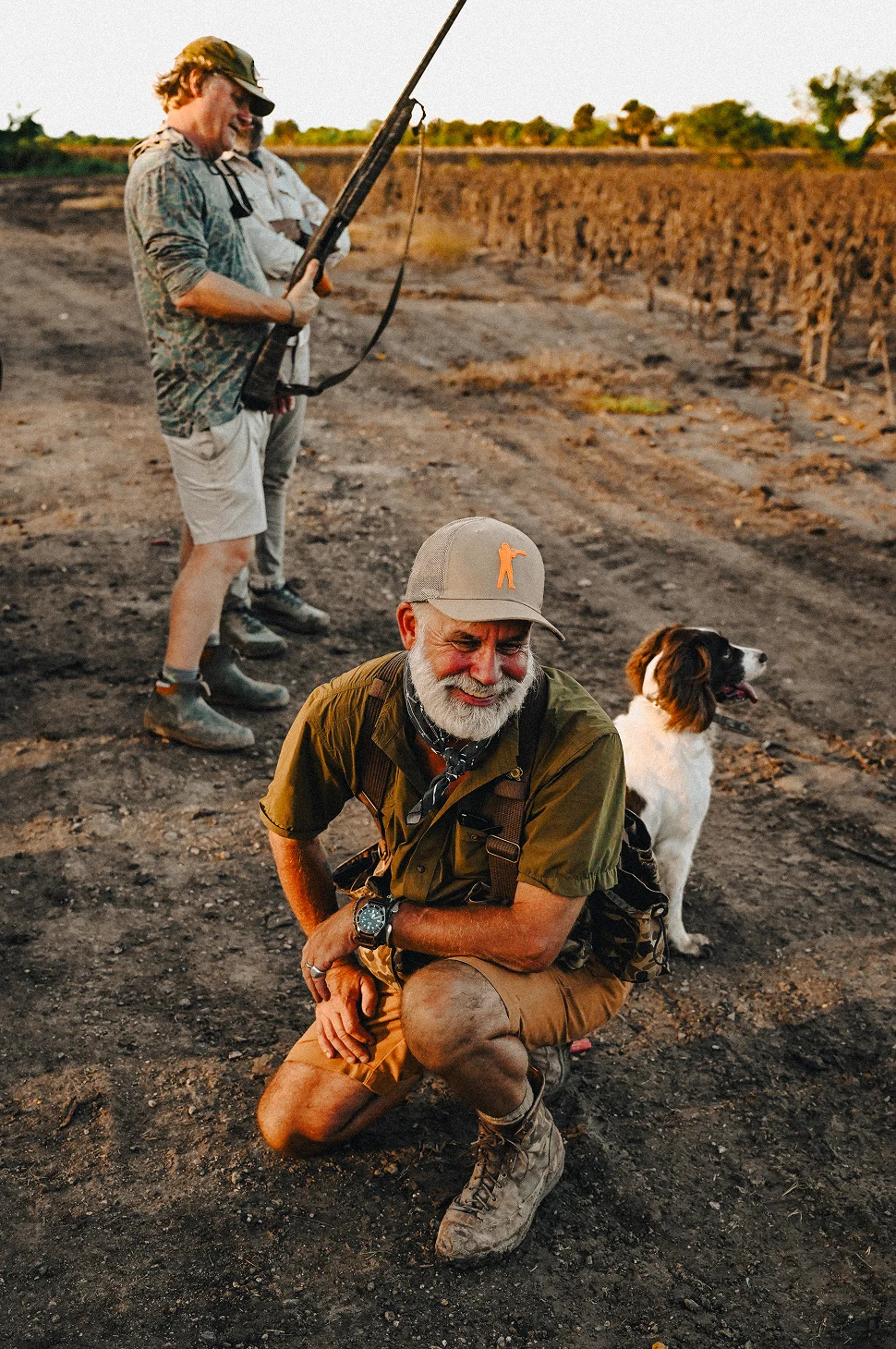
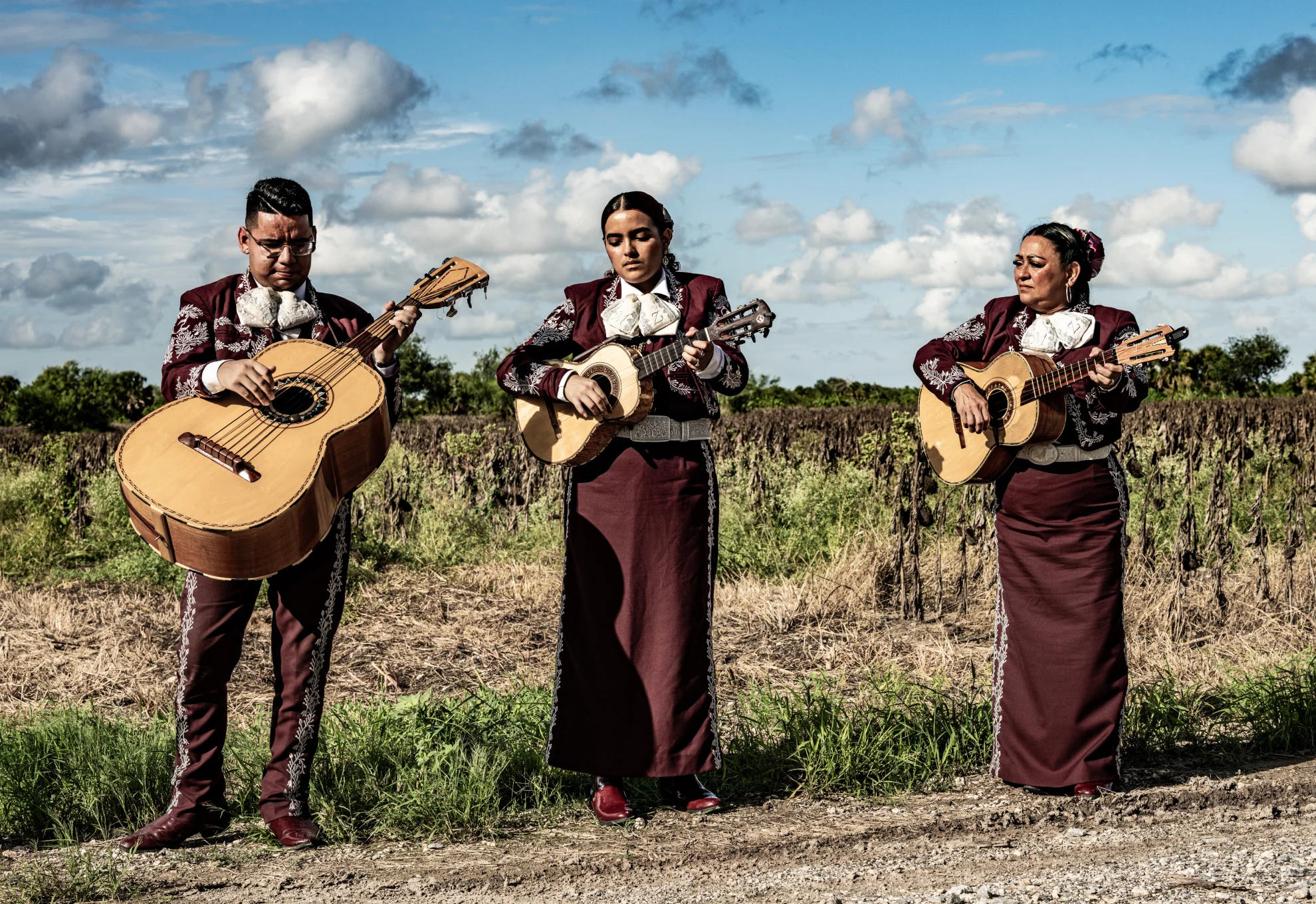
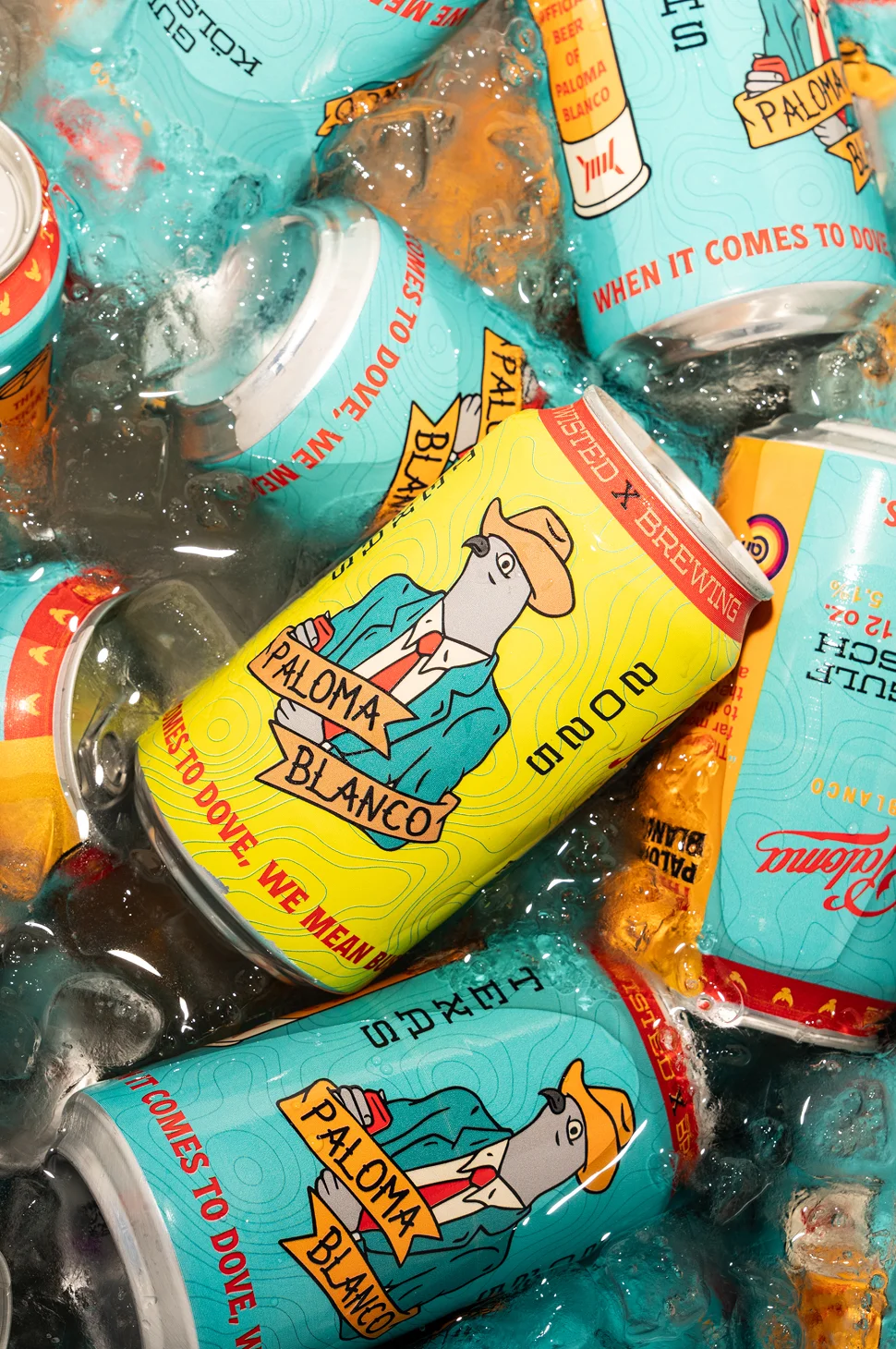
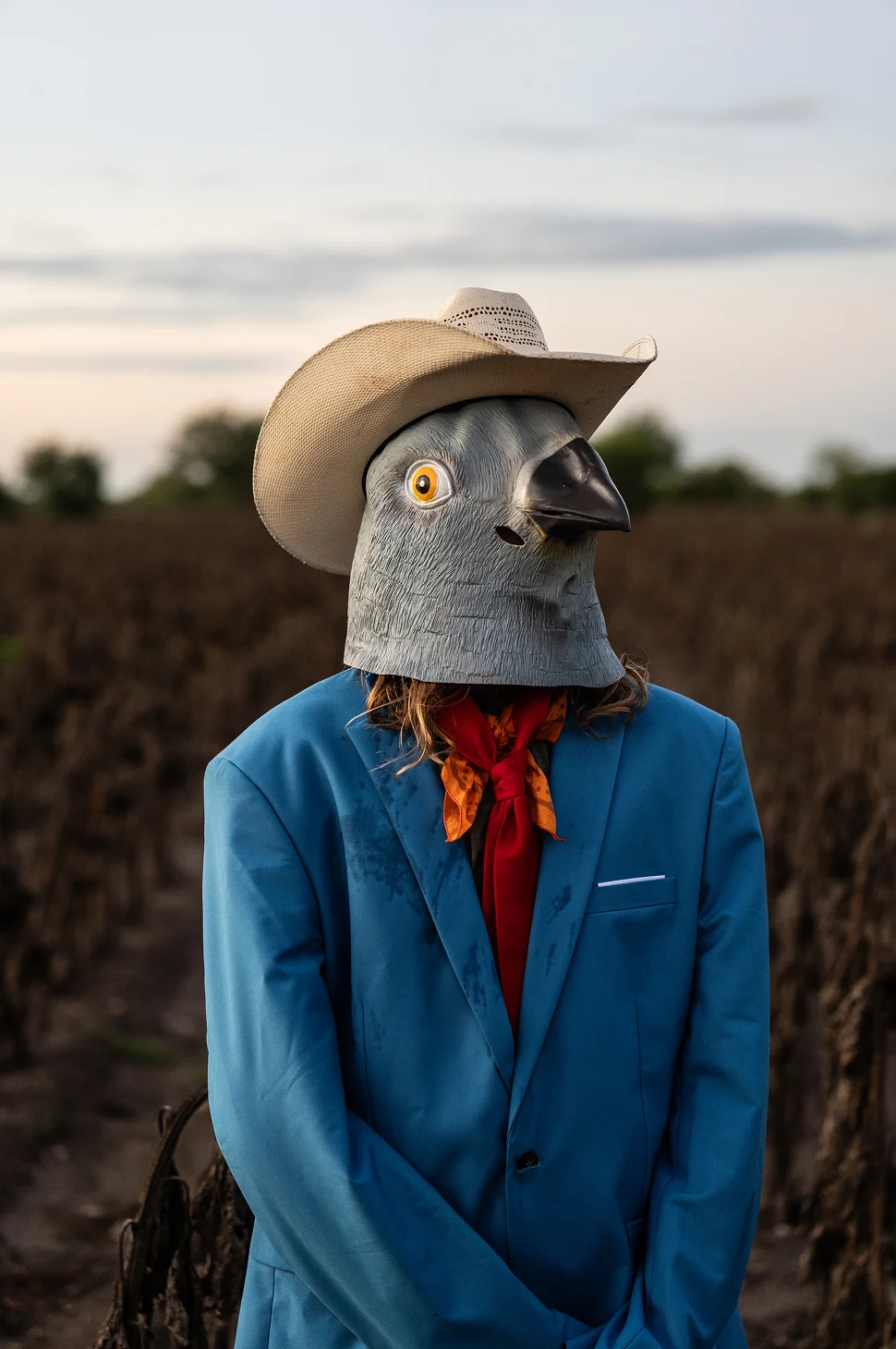
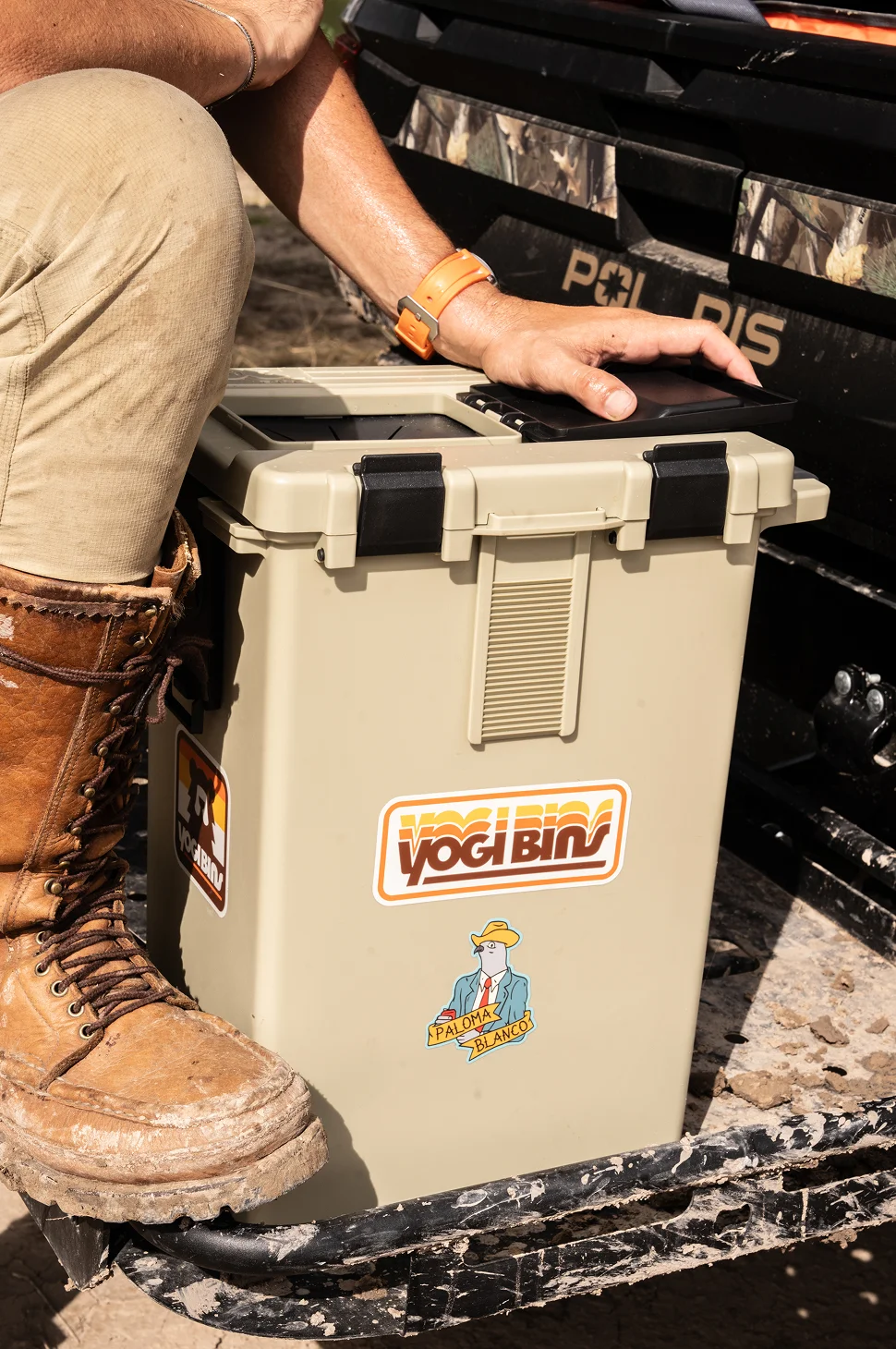
Exhibit A is Paloma Blanco. This yearly dove hunt, which John started almost a decade ago, is an invite-only affair that goes full speed on just about everything. They bring in brand sponsors, hire some mariachis, provide next-level food and cocktails, and are always looking for ways to make it better. After several years of wanting to take John up on his invite, my schedule finally allowed for a trip down south to the hallowed dove fields that host Paloma Blanco.

The hunt was everything I hoped it would be and more, which I felt warranted a follow-up conversation with Mr. Dunaway. In our interview, we talk about the humble beginnings of Paloma Blanco, the key to keeping the magic, and what he sees for its future.

Here’s ship captain, photographer, and Paloma Blanco maestro, John Dunaway.

Levi Goode: For the broader audience out there, can you tell me a little bit about yourself?

John Dunaway: Well, I guess you’re talking to me because I throw a little dove hunt in South Texas and people keep wanting to come to it. Outside of that, I’m a local guy. My dad’s from the area. I was born in Brazil, but I’ve been in Houston since I was about three years old. I grew up saltwater fishing, doing all of the inshore stuff. Then I got into waterfowl hunting when I was about 12. That’s actually where I got introduced to White Wing Fields, where we do the dove hunt. We were hanging out, living here, and hunting around South Padre Island all the time. Professionally, I’m a ship captain — a harbor pilot in Houston.

LG: You don’t meet too many ship captains these days.

JD: I love what I do. I get to be on the water and the schedule has afforded me the flexibility to do a lot of these other things in outdoor pursuits with my buddies and this hunt club that we have. I work two weeks on and two weeks off, so that allows me a lot of flexibility.

LG: Now, let’s get to the dove hunt. I’ve been eyeing this thing for years and I just haven’t had the chance to take you up on your invitation until this year. What was the catalyst for it?

“We just wanted it to be more than a normal dove hunt, more than just being hot and drinking cold beers.”

JD: We have formally done it for eight years. Truly it just started as, “Hey, let’s go dove hunting.” It was never intended to be an organized event. I remember realizing when I was younger that the dove opener was a big deal for people. People had baby pools for their dog to stay cool because it’s so hot down there and there’s no water to be found. People had coolers and shade tents. I was like, what is this? There was something very different about it, and that always stuck in my mind. People had grills going and it was just this very laid-back, fun atmosphere.

When I was in college, I would fly down whenever I could and hunt the opener. After college, I read a Garden & Gun article about a dove hunt that some folks threw with this tablescape and elevated food. I vividly remember reading it and thinking, I know a place that has this atmosphere. So I grabbed some friends, packed some coolers, and decided to make a signature drink—the paloma. I cooked in the field so we could have something to eat in the afternoon. That was the real catalyst. We just wanted it to be more than a normal dove hunt, more than just being hot and drinking cold beers.

LG: I mean, we definitely did that, too.

JD: [Laughs] Good point. Nothing against that.

LG: So, it just ended up growing from there?

JD: Maybe three, four years later, I brought some buddies with me and we just did it a little bit bigger. That time, my wife came with my daughter, who was about eight months old. We put headphones on her and put her in a pack-and-play. We cooked all our meals on an Old Smokey, and had six people hunting. We kept hearing this mariachi music on the other side of this tree line, and I said to my friend, “Man, that must be the most badass speaker ever. It is ripping.” One of the guys ended up walking down the tree line, and said that these guys have an actual mariachi band standing with them. That’s when we decided we’re doing that next year.

Then we invited, I don’t know, maybe 15 guys who came the first year. We gave it a name and it was simply 15 people who I love hanging out with. Morgan Weber was in on it. Luckily, he decided to handle the cocktails. He brought the food component. We had a mariachi band. After that, my other friends began to take notice, and we’ve held the hunt every year since — other than Hurricane Harvey. We took a year off that year.

“I have a good friend from Colombia, and she said, “You can’t do that. That doesn’t work.” My only response was, “Well, tough shit. We just did.” [Laughs]”

LG:  I should probably ask where the name came from at some point.

JD: I landed on the paloma, the drink, because the Garden & Gun article mentioned that the other group had something after another cocktail. I forgot what it was. I want to say they were in Georgia.

LG: I think they just drink moonshine and diesel.

JD:  [Laughs] Yeah, exactly. We thought about a bourbon drink, but it didn’t really fit the bill. It needed to be tequila. We wanted to grill on mesquite wood because we were in the Valley and it needed to be a tequila drink. Paloma is ‘dove’ in Spanish, so what’s more fitting than that?

LG:  Tequila. Mesquite. Spanish. Now, you’re speaking my language.

JD: Blanca is white, so like, we wanted to add that. The name actually isn’t grammatically correct. It should be Paloma Blanca because paloma is feminine, but it was an all-guys group so I decided to call it Paloma Blanco. I have a good friend from Colombia, and she said, “You can’t do that. That doesn’t work.” My only response was, “Well, tough shit. We just did.” [Laughs]

LG: So is that baked into your personality? To go all-out on something like this?

JD: My dad is a huge outdoorsman. He’s the one that got me into all the fishing and hunting and stuff. My mom is Brazilian and she loves hosting people, always has. It didn’t matter what it was, if there was an excuse, it was going to be an elaborate table spread with tons of food and drink and music. So I get that from her. Those two worlds meshed. It really started in college. I went to a military academy and we didn’t get a lot of freedom. There was a park nearby, and we started gathering one night a week to grill burgers. Then, I thought, let’s play softball. Then, we’ll have the big meal on a Saturday. So yeah, that’s just my nature.

LG: Obviously, that’s something I can relate to. What is it about dove hunting that lends itself to something like this? You don’t hear about people bringing in a mariachi band for whitetail hunts, although you know I’ve thought about it.

“It’s so much less serious. You don’t have to be quiet, you don’t have to stay hidden in a blind, and you can move about freely.”

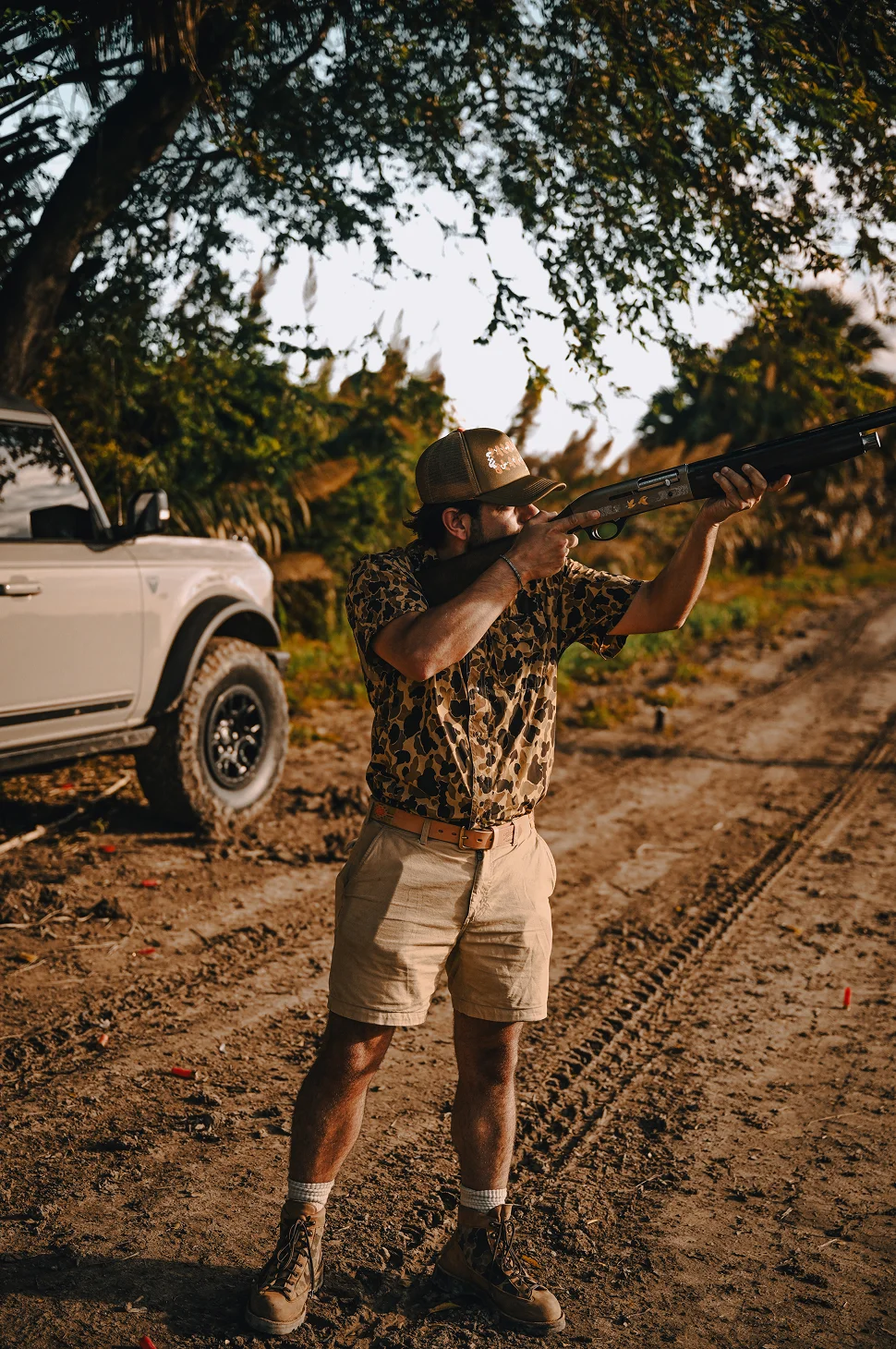
JD: Dove hunting is probably the only type of hunt you could get away with. It’s so much less serious. You don’t have to be quiet, you don’t have to stay hidden in a blind, and you can move about freely. And especially down there, the volume of doves is very different from what most people get to shoot in Texas. It’s not in Mexico, but it can be wild, I mean truly wild, at times. You can pick and choose your shots. Maybe I want to shoot for a little bit, maybe I don’t. It allows people to roam. They can get together, they can talk music. They can have a grill running right next to ‘em and have a mariachi band in the field and still be shooting birds.

LG: Looking back, how has the hunt evolved over the years? Obviously, it’s not just 15 guys hunting in a dove field anymore.

“Since it’s grown, the only reason we’ve publicized it at all was to give back to the brands who’ve given us so much.”

JD: It’s very different. That first year, I rented a duplex and we had a bunch of guys with not a whole lot of expendable income. Our thought was, how cheap can we do this? Everybody was very, very tight because we were all in one duplex. We all hung in the pool together, we all cooked all of our meals together, and we all went to the field together. That was awesome, but it’s still awesome.

As it’s grown, every year we seem to add something. It wasn’t exponential growth. We went from 15 to 20 to 25 and then we went to 30, and then we made a jump to 50 and then it was like 50 to 75. And then two years ago we hit the hundred and we’re like, “Oh shit, how did this happen?” It’s invite-only. It’s never been about making it as big as possible. The only reason that I’ve publicized it and really drew attention is because I had a lot of buddies who own brands and they’ve been coming since the early days. Turtlebox, Twisted X Brewing, Pac Mule, and quite a few others. All these people gave what they had and it helped keep our costs down. We’d be leaving on Sunday and I’d be sitting around with a pocketbook telling everyone it’s going to be $237.40. And that’s always been to cover costs. I never wanted to take any money out of it.

LG:  Sure, you don’t want to go broke.

JD: By year five, I remember I spent $35,000 and fronted the whole thing. On Sunday, I’m sending out an email like, “Hey guys, this is what your total is.” People were paying cash, Venmo, checks, and it was a mess. It was actually turning into work. That was when we made the transition and set up a website to collect the money. Things have evolved. Since it’s grown, the only reason we’ve publicized it at all was to give back to the brands who’ve given us so much. I hope their business does well and maybe if we shine a little bit of light, we’re doing good for them, and then in turn they help us out.

LG: How do you maintain the magic? Now that it’s become more of an official thing, how do you make sure that it’s what you want it to be?

JD: I would say that it’s all about the invites. The people who show up truly are what Paloma Blanco is. We keep adding all these antics and making it wilder and wilder. If people came for the wrong reasons, I think it would destroy the magic.

“But I watch the people just grinning ear to ear the whole time, and it’s so much more fulfilling. And the partnerships and things that have come out of it. I just love watching that.”

LG: You mentioned earlier that you started out with very humble beginnings. Is it rewarding to look at what it’s become, who’s still there, and how people have progressed through life?

JD: I was actually hanging out with one of the family members who owns the dove fields. She showed me a video of one of the early years when we were in that duplex. She said, “Wow, look at how small and uncomplicated it was. Do you miss that?”

I told her that there are parts of it that I do miss because I could hang out with a few people, instead of trying to visit with everybody. Now, I’m trying to visit with everybody. My attention’s all over creation. But I watch the people just grinning ear to ear the whole time, and it’s so much more fulfilling. And the partnerships and things that have come out of it. I just love watching that. Sure, I don’t get to sit with 20 guys anymore. Now there’s a hundred. But, I don't see anybody sitting in the corner by themselves, being left out. They just find somebody to talk to and all of a sudden there’s these relationships that build.

LG: Do you see yourself doing this down the road?

JD: I think so. It may not always look the same, but I don’t think it’s going anywhere. I would like to bring my kid now that I’ve had my fun. I tell guys all the time, eventually it’s going to burn out. Nothing stays the same forever. Eventually, people will say, “Look, I’ve been coming for 10 or 15 years and it’s been awesome, but I don’t have to go every year.” When it finally dwindles out and becomes embers, I always joke that it’ll be me and the same five guys with our five kids. We’ll be back to grilling on an Old Smokey and drinking a cold paloma by ourselves. You know what? It’ll still be what it is. It’s just a dove hunt.

Photography by John Dunway

Interview

The Music and Minds Behind
 Howler Bros’ Magic

Love ‘em or hate ‘em, you’ve got to admit that Howler Bros are a force to be reckoned with. I happen to fall into the “love ‘em” camp because I’m a big fan of anyone who sticks to their guns, and that’s exactly what Rick Wittenbraker and his team have been doing for more than a decade now.

Their eye-popping designs, hardcore commitment to quality at every step, and Texan bravado are just a few of the reasons they’re often imitated, but never replicated. I dig that.

On a humid, sunny Thursday in Austin, I had the chance to sit down for lunch with Rick—the Vice President of Business Development and one of Howler’s first employees—to shoot the proverbial shit. Over the ambient hum of traffic on South Congress, we talked about the things that interest me most about this unicorn of a company, from how they generate creative ideas to which ideas don’t make the cut. It surprised me to hear that both answers are equally important.

It also surprised me how many times music came up during our conversation. You wouldn’t think an apparel brand would be so musically minded, but it makes sense when you walk into their stores. You can almost hear the pedal steel and lively snap of the snare when you look at one of their shirts—and that’s no accident.

I’ll let Rick explain.

Levi Goode: How’d you make your way to Howler Bros?

Rick Wittenbraker: A mutual friend introduced me to the founders, Chase Heard and Andy Stepanian. The three of us went to lunch and we just hit it off. I was at Yeti at the time, which isn’t exactly the same industry, but there’s a lot of overlap. Through that meeting, we became fast friends, and eventually we were having beers every six weeks or something.

At that time, Yeti was on this rocket-ship trajectory. It was just exploding and we couldn’t make products fast enough. Not that I had all the answers, but I had just been in the industry a little bit longer than Chase and Andy. We’d see each other at the same trade shows and I’d end up hanging out with them more than anyone. Eventually, they asked me to be on the advisory board, which really meant we were having beers once a month [laughs]. Long story short, it snowballed from there. Eventually, I came on the team to help shape the brand. I've been here for over 11 years now—I think I was the fifth employee.

“I would say Austin is part of our DNA. It has this history of being a town that has always embraced funky weirdos and category busters.”

LG: I’m not sure if y’all consider yourselves a “Texas company,” but I think most people see it that way. Why has Howler made their home here?

RW: There’s so much this state has to offer, both in the geography and the terrain and all the different ecosystems. It has a huge coastline that's often forgotten. All of those things—and the activities they provide—inform what we love to do as a brand. Specifically, I would say Austin is part of our DNA. It has this history of being a town that has always embraced funky weirdos and category busters and it's been a very collaborative place for a long time. It's not just a big city. It's grown a lot, but it’s had an awesome creative community for many years

LG: That’s a great point. It probably says something that Willie, Townes, or Waylon would look spot-on wearing a Howler shirt in the ‘70s. Do you think Austin has informed the aesthetic?

RW: Totally. It has influenced who we are, how we act, how we carry ourselves, and how we talk to our customers. It also provides a lot of liberty because it’s such a mashup. We take a lot of inspiration from vintage Western culture, but we also take a lot of inspiration from music and surfing and all these other communities. If you lived in the city that was more “straight and narrow,” it probably wouldn’t have ended up the same way.

LG: Eccentricity isn’t exactly rare around these parts.

RW: Shit, it’s almost a requirement.

LG: Speaking of eccentricity, I heard you use the term “Howlery” in an interview to describe if an idea makes sense for the brand or not. Care to explain what that means?

RW: Good question [laughs]. That was actually Chase and Andy’s term, but it was without a clear definition. It basically meant what felt right. It’s common to hear us say “that’s Howlery” or “that’s not Howlery enough.” It’s something we’ve worked hard to define because it is difficult to define. Some of it is the aesthetic, some of it is attitude and demeanor, and some of it is character. As we continue to grow, it becomes more important to define it.

One of the ways we do that is to make comparisons. If we were a beer, we’d be this beer. Or, we would not be these beers over here. It’s not an exact definition, but it helps frame up a state of mind for whoever is trying to wrap their head around the brand. One of the biggest things that I’m a massive believer in is defining the “no” list and the stuff that is outside of our circle.

LG:  What are some specifics?

RW: Several years ago, we made this book that comes with a vinyl record, and the book is actually the liner notes of the record. We made a quiz to go along with it with a custom scantron. For example, it may have two pictures of Willie Nelson and the employee will have to define if we’re “Red Headed Stranger Willie” or “Stardust Willie.” There’s no right answer, but it gets you thinking.

“I try to show people what a brand is. It’s sure as hell not a logo—that drives me insane—but it’s also not a product and it's not a company.”

LG: I like to think of myself as “Shotgun Willie.”

RW: Solid choice. With all of this stuff, I try to show people what a brand is. It’s sure as hell not a logo—that drives me insane—but it’s also not a product and it's not a company. The brand is the character of the company. Think about a movie. The character is written, they give the actor a backstory, a personality, where they're from, and maybe their accent. Maybe they have a limp, who knows. The actor has their interpretation of the character, but that character is defined beforehand.

My favorite example is always Han Solo. He’s this smart ass troublemaker. He owes a lot of people money. He’s kind of a derelict, but you also kind of love him because he’s this badass who doesn’t have a perfect record.

LG:  The kind of guy who replies, “I know” when someone says, “I love you.”

RW: Exactly. He has this attitude and swagger, but also he's always on the run from some debt collector. All of that is written and baked in. We know those things about Han Solo and then Harrison Ford brings him to life. With regards to Howler, Andy put a lot of energy into the character ahead of time, trying to craft the personality. One of my challenges when I joined was trying to put that on paper so the rest of the folks coming in the future would be able to then take it and run with it.

LG: I think people see it as a limitation, but once you nail that down, it creates a lot of freedom.

RW: It’s an empowerment, one hundred percent. I think it’s a limitation when you don't have your character defined. It’s empowering because your team can get into character. When I’m responding on social media, I know how to act. I’m not acting as Rick, I’m acting as Howler. We know what that tone is, we know what that attitude is, we know the slang, and the shit that we’re going to say versus Rick or you or anybody else.

LG: One of the main reasons I wanted to chat with you was to talk about ideas. In a way, you could say that’s Howler Bros’ main product, and I’d love to hear about how an idea does or doesn’t come to life.

RW: Our creative process usually starts with some sort of big idea or inspiration, just like most people. Maybe we want to feature a bird in our next line or celebrate life on the coast. Then, it’s the process of pulling everything we can think of that relates to that idea. We do a really good job of taking those ideas and iterating—here’s what this idea could be.

I’ll give you an example. Last spring, one of those ideas on the table was the caracara, sometimes called Mexican eagles. It’s a super cool bird up and down North America, but here in Texas, it’s more prevalent along the coast and farther south. So, what do we do with that? Our team comes up with all these ideas, and we refine, edit, and iterate to a point where we really love where it’s going. We did an embroidered caracara shirt, an all-over print, and we put a lot of effort into creating the print and working with artists on it. We then extrapolate that print onto shirts, board shorts, t-shirts, and all this stuff. It was just one little idea that ended up coming to life in all these different products.

“People go through phases. That’s fine, I think. But when that’s a Slim Aarons photo, or when it’s a Jimmy Page lick on a Led Zeppelin song, it can’t be anybody else. That’s what we’re going for.”

LG: What sort of ideas don't make the cut?

RW: There are a couple ways it doesn’t make the cut. One way is that we love the idea, but the artwork is not there yet or the design of the embroidery is not quite right. We won’t throw it away forever, but it needs another crank or two of iterating in the shop. Sometimes, we nix an idea because we just have too many ideas. Only the strong survive. We had one a couple of years ago that was a hammerhead shark, and it was really cool. People would’ve loved it. The idea was great, but the design wasn’t quite there, and it needed more work. And then sometimes you have some where you like the idea, but you just can’t execute it within our brand’s voice. It could be the topic, the subject, a color, whatever, and it just feels forced or it feels like it's not us. One of the things we do all the time is put tape over any logo or name and say, “Okay, does that look like us?”

LG: That’s interesting, photographers and artists do the same thing.

RW: For sure. You know when it’s Slim Aaron's photo or Ansel Adams’ photo. Music’s a lot like that, too. It doesn't mean you can’t experiment and do other shit.

LG: We saw how Dylan’s gospel phase turned out…

RW: [laughs] Fair enough. People go through phases. That’s fine, I think. But when that’s a Slim Aarons photo, or when it’s a Jimmy Page lick on a Led Zeppelin song, it can’t be anybody else. That’s what we’re going for.

LG: My favorite thing about Howler Bros is that y’all design everything from the ground up. I’m sure it isn’t easy, though, so why put up with the headache?

RW: I think of it like music. Any good musician wants to share a song exactly the way they envisioned it, not 90% of the idea. They’re not piggybacking off someone else’s guitar or drum beat. They’re not just putting lyrics on top of a song. We want to write the song from scratch because it means something to us, and we want to go through that process of writing the drum piece, the guitar piece, the lyrics, the whole shebang.

It’s a big part of what we do and how we do things. There are a lot of brands out there who maybe don't care as much about doing it the way we do it. And that’s fine. There’s nothing evil about it. It just doesn’t have the same level of intentionality. It doesn’t have the same care and it doesn’t have the same originality and creativity.

LG: People forget about the value of the process, even if that process gets to the exact same place as someone who took a shortcut. If you took a helicopter to the top of Everest, you’re in the same spot as the guy next to you who climbed up, but he had a much different experience.

RW: Totally. That's a great example.

LG: So there’s got to be value in placing every stitch, even if the shirt ends up looking the same as if you slapped a logo on someone else’s work.

RW: Chase is incredibly talented at what he does, and we’ve built this badass team around him that’s really good at supporting the greater vision. But, every stitch remains important to us as a company. It’s something we care a lot about. We also care a lot about not phoning it in. Back to your earlier question, we kill shit all the time because we feel like this isn’t original enough, or it’s not us.

There are a lot of brands out there that have ordered from us, and then they come out with something that looks a lot like it the next season, which is super annoying. I don’t care if we’re supposed to be flattered, it’s annoying. But I think in some way it’s sort of this cheap quick win and they’re never going to have the same depth of satisfaction. They took a helicopter to the top.

I also want to point out that we’re not for everybody, and we recognize that. We want to be with the right customers and find the right people. Now, hopefully there’s a lot of them, but it's never going to be all of them.

“It’s all our invention. We do whatever we want. It’s almost like our wacky EP release. It doesn’t have to fit on the album.”

LG: It seems like sticking to your guns is a common motif for Howler Bros.

RW: I see it as heeding our own call, really. The team we’ve assembled really thrives on that and loves the opportunity to crank out new stuff. We have our core offerings, and that requires creativity and originality every time. We reinvent that every six months. We also have all these special releases that tend to be collaborations and partnerships. Then, we have our own internal things that we launched called “Mutations,” which are our wilder, freakier endeavors that we just want to make just because. It’s not going to be for everybody, and we’re going to make it in smaller batches. It usually comes with some whole backstory and whatnot.

We just did one a few weeks ago based on the Bermuda Triangle and the lore behind the Bermuda Triangle. We created all these products based on it, and then we made up this whole story and film around the origin. It’s all our invention. We do whatever we want. It’s almost like our wacky EP release. It doesn’t have to fit on the album. We’ve done another release about a legendary mythical beast in Idaho called the Swan Valley Monster. There’s this lore up there and all these sightings and reports and crazy-looking drawings. We just like doing that shit. It’s a different set of tools, and a different set of requirements. The brief can be tougher to satisfy, but when you do it right and it works, it’s freaking awesome.

LG: I guess if y’all are doing what you want to do, the creative drive is always there.

RW: That’s one reason, and the other is that we like to work together. I always go back to the name Howler Brothers, plural. We don’t have to be from the same parents, but we have a friendship and something that means something and that matters to us. It matters how we treat people. It matters how we treat our teammates, our ambassadors, our retailers, and our audience. It’s not just for us. It’s a “we” thing. Like I said, it’s called “Brothers” for a reason.

Photography by Steve Schwartz

Get Updates